Showing posts with label USMLE Step 2 CK. Show all posts

I am ECFMG Certified

The following is a guest post.  It's a contribution article from a graduated Saint James School of Medicine student.

ECFMG CertificateWell the time has come, I am ECFMG certified. Thank you Almighty for such a great success. It's such a relief and I can't believe it's done. It was a long journey and accomplishing it is a great feeling. Of course the journey is not over yet; now I have to work on getting into residency but I'll put that worry to the side and enjoy this moment and just reminisce on all the work that was put into it.

The process of getting the ECFMG certificate is a very simple process and SJSM did a great job in helping me get it. They were very supportive in getting my papers done fast and getting my credentials verified so the certificate would arrive at my house.


Follow me on twitter and get updates automatically.

USMLE Step 1 and USMLE 2 CK Tests Will Not Be Merging

A reader asked if the USMLE Step 1 and USMLE Step 2 CK will be merging, and the answer is no. They are separate tests and they will stay separated according to the NBME.

According to the NBME:
Rumor: Step 1 is 'going away' or Step 1 and Step 2 CK are being combined into one exam.

This urban legend seems to spring from some misperceptions about the recommendations made by the Committee to Evaluate the USMLE Program (CEUP) with respect to the assessment of basic science. Early feedback from the wide variety of stakeholders surveyed to inform CEUP’s work told us that from both a licensing and an educational perspective, the separate design and administration of an examination of the basic sciences seems to create an artificial separation of basic and clinical sciences. This sentiment was frequently expressed by stakeholders, including faculty members from both the basic sciences and clinical sciences. The weight of opinion favored the integration of basic science and clinical science concepts throughout all examination components rather than the current segregation of basic science content in Step 1. This does not mean, however, that Step 1 will be eliminated from the USMLE sequence or that Step 1 and Step 2 CK will be combined.

Steps 1 and 2 CK will exist as separate, discrete examinations for at least the next several years. During this time, evolution in content coverage is likely. At some point as USMLE evolves, the current Step structure could shift. If this occurs, stakeholders will be advised of changes well in advance of any change. Plans for transitioning to a new structure will be provided well in advance so that the phase-in will be smooth and equitable, to minimize potential disruptions for examinees, schools, licensing boards, or other constituencies. Additionally, the NBME will be attentive to other uses of USMLE performance data and strive to meet educationally sound secondary uses.
I hope that clears up the rumors.  Always check with NBME and ECFMG if you are unsure about anything.


Follow me on twitter and get updates automatically.

How I Passed the USMLE Step 2 CK

USMLE Step 2 CK
If you were told that USMLE Step 2 CK is easier than the USMLE Step 1, then who ever told you must’ve taken the Step 2 CK long time ago. Whatever the case may be, Step 2 CK is no longer easier than the Step 1. The passing rate and average of CK is very high and therefore the difficulty has been increased.  Just note that there is no one book to study for the USMLE Step 2 CK. For Step 1 we had the First Aid but for Step 2 CK, the content changes constantly, that I think why authors and publishers have a hard time keeping up with changes.

First of all don’t jump to the USMLE World (UW) question bank, because there are missing information in the explanation of the question bank, because you are expected to know the missing information. You must have some kind of background foundation before you can go over UW.

How to Begin Studying
Before you start studying, research which book for the USMLE Step 2 CK will be good for you. There are several that I know of, which my help you, but everyone is different.
  • Yale G book is very comprehensive source in terms of what you need or may need. It’s designed to give the reader a study source for both Step 2 and Step 3. You can buy it online from the author’s website or from Amazon.com. The book looks hard to read, but it has a lot o high-yield information for the test. According to the author, it has notes from Kaplan and UW and other sources combined and organized. I have a copy of it but I didn’t use for the test so I can’t give a good review of it. It’s a recent published book so not many know of it.
  • Master the Boards for the USMLE Step 2 (MTB2) is an easy read book and it’s used by large number of medical students. However, it has so many missing information that you will get frustrated with it. I may publish my notes online with the MTB’s page number, but that is if I have time. If you use MTB2 then you must use Master the Boards for the USMLE Step 3 (MTB3). The pediatrics and the OB/GYN section from MTB3 is very well written for the USMLE Step 2 CK. I used this book for my test, and I passed it because everyone was laid out, but I still feel a lot of basic sciences were missing, which was a necessity to go over. MTB2 and MTB3 doesn’t have the pathophysiology for a lot of the disorders, just the management.
  • Step Up to Step 2 CK is a book, which is co-authored by Dr. Brian Jenkins from Doctors in Training (DIT). It has good amount of information but you have to supplement it with some other source, MTB2, because “the next best step” is missing in some of the disease sections, if not all. This book has DIT videos that go with it, similar to DIT for Step 1 with First Aid.
  • Kaplan Lecture notes (LN) is used for those who just need to know everything. Kaplan LN is the ultimate source for Step 2 CK, but some management changes with new research. Kaplan LN also has videos that go along with the notes.
Now I recommend you choose at least one book source and stick with it. Now with each section make sure you do questions to drill the information into your head. I recommend Kaplan QBank first. Kaplan may not have the best questions, but their explanation with the supplemental book source, helps in understanding the material. Make sure you do all of Kaplan questions, and do them just ONE TIME. And take notes from the questions. Also, do Kaplan questions by the section you read the book. So if you read Infectious Diseases on MTB then do Infectious Diseases questions from Kaplan Qbank.

After you do Kaplan questions, then do UW by section at least once. I recommend you do UW questions by section at least once because it helps in memorizing the information when you read the other answer choices multiple times. In UW, the wrong answer choices are usually the right answer choices for other questions. After you completed UW once by sections. Reset the question bank and now do it mixed, random, and in timed mode; from now on do all question in this manner.

I recommend you do UW at least THREE TIMES to fully grasp the material. The more times you do UW the better you will be able to master the concepts being tested. As always, do the legit online version, because UW constantly updates their questions, which is the best thing you can get right now because management changes often. However, do not use the percentage correct of UW questions to assess yourself, because it won’t do you any good. The correct percentage does not assess if you know the material or not. UW has a separate assessment test for that.

Assessment Tests
If you also want to increase your access to questions, do the NBME subject based tests and also the comprehensive tests. In terms of which assessment tests give you a predictable score; everyone says UW assessment (UWA) to be closest to predicting it. If your UWA score was in the 220s then it’s kind of unpredictable, but if it’s 230+ then it’s very close to predicting your score.

Unlikely USMLE Step 1, Step 2 CK does not have any solid assessment for predicting your score accurately; you just have to do UW as many times as possible.

I hope this helps because getting guidance for Step 2 CK is hard to get, because no one can give you any solid advice.


Follow me on twitter and get updates automatically.

Start Early to Study for the USMLE Step 2 CK

USMLE Step 1 studying was simple, after you are done with videos you just rely on First Aid and USMLE World QBank (UW for short). It's not the same for the USMLE Step 2 CK.  Step 2 CK has no one source in order to fully understand the material.  Unfortunately you have to make your notes your primary source. It's unfortunate that even to this day there is no one source that is a full comprehensible source.


USMLE World QBank for the Step 2 CK is NOT enough, especially if you have a big gap since you took Step 1. UW has all the main things you need to do well but unfortunately, it's just one piece of the puzzle to crack the Step 2 CK. When it comes to books, I strongly suggest you stick with your First Aid for the USMLE Step 1, and add notes to it. You need your Step 1 notes for Step 2 CK. Unfortunately MTB doesn't have the pathophysiology explanations that you need in order to understand why you conduct the proper management.

I noticed you get the hang of things when you do as many questions as possible. As in, do as many Qbanks as possible.  Do not jump to UW without some background reading, otherwise you'll be lost. If you are into question based studying like me, then start off with Kaplan QBank. Go through Kaplan Qbank first with a a book. MTB 2 and 3 is goes hand in hand with Kaplan QBank. 

Additional sections you should add to your First Aid are Surgery, OB/GYN, and Pediatrics. Other than the sections mentioned, and additional diseases, the only other thing you basically need to add to your First Aid for the USMLE Step 1, are diagnosis and treatment info. Don't waste your money or time on too many sources. I admit, some treatments change every year, which you should update your self on it, and for the USMLE World updates it constantly.

NOTE: Basic Science concepts will be re-tested on USMLE Step 3.  So save your Step 1 Notes.


Follow me on twitter and get updates automatically.

Tutoring Available for USMLE Step 1, Step 2 CK, and Step 2 CS

For those who need tutoring for all three tests, the USMLE Step 1, Step 2 CK, and Step 2 CS, you're in luck because help is available.  Dr. M Rahman is offering tutoring for those who need help.  I mentioned earlier about Dr. F Ahmed's services for Step 2 CS, which is no longer available since he is in his residency currently so he is busy. 

Dr. M Rahman passed all his USMLE tests in the "first-attempt," therefore he is go-to guy for help. He will give you insight on what to do and what not to do.  He has accomplished what most of us are still striving for so be aware of that.

He will provide his prices for his tutoring service.  Dr. Rahman, is still conducting rotations so he knows what you are going through in terms of time, stress, and money.  If you are interested then please use the contact form.


Follow me on twitter and get updates automatically.

Don't Jump to USMLE World for Step 2 CK

I've been very busy recently so, I have a hard time keeping up with new posts but I wanted to share something.

One of the biggest mistakes I made was jumping to USMLE World (UW) from the beginning of my study plan.  USMLE World is a learning tool designed for people who already have a foundation of the concept being tested. You can learn a lot from that question bank but unfortunately there will be gaps of information which UW will not provide.  It's better to get another source to get an idea of what you will be tested on.

For example, if you were to learn about electrolytes, UW will test you on it.  However, you may not be able to understand fully on why certain things happen.  So before you start make sure you start off that explains the basic.  Also, if you just recently passed your USMLE Step 1, then you have a head start on your studying.


Follow me on twitter and get updates automatically.

Renal Tubular Acidosis Explained

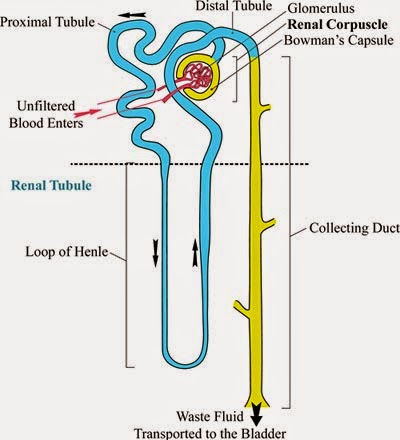
Kidney Tubules AnatomyI hate really hate studying this material but once you understand it, it becomes very easy to memorize.

Remember in renal tubular acidosis (RTA) there is normal anion gap.  [Na - (Cl - HCO3)] = 6-12.
Proximal part is the upper part of the renal tubules, while the distal part is the end part of the tubules.
 
Type II (Proximal)

  1. Pathophysiology: Decreased ability of the proximal kidney tubules to reabsorb most of the filtered bicarbonate because normally bicarbonate is filtered at the proximal tube.
  2. Urine pH: Variable: Urine pH is basic until bicarbonate is depleted, the it is acidic (less than 5.5)
  3. Blood K+ level: Low
  4. Kidney Stones: No
  5. Associations
    • Diagnosis: Infuse bicarbonate and evaluate the urine pH
    • Treatment: Thiazide because it causes volume depletion, which will enhance bicarbonate reabsorption.
    Type I (Distal)
    1. Pathophysiology: Distal tubule is damaged so it is unable to generate bicarbonate. Without bicarbonate, H+ cannot be secreted in the tubule to the urine, raising urine pH.
    2. Urine pH: Urine pH more than 5.5.
    3. Blood K+ Level: Low
    4. Kidney Stones: Yes
    5. Associations
      • Amphotericin use
      • Lithium Use
      • Sickle Cell Disease
      • Autoimmune Diseases (SLE, Sjorgen Syndrome, Rheumatoid Arthritis, etc)
    6. Diagnosis: Infuse acid
    7. Treatment: Bicarbonate to be absorbed in the proximal tubule, because majority of the bicarbonate is absorbed there.
    Type IV (Distal)
    1. Pathophysiology: Decreased or diminished effect of aldosterone at the kidney tubule. Loss of sodium and retention of potassium and hydrogen ions.
    2. Urine pH: Less than 5.5
    3. Blood K+ level: High
    4. Kidney Stones: No
    5. Associations
      • Diabetes
      • Addison's Disease
      • NSAIDs
    6. Diagnosis: Urine salt loss, despite sodium restricted diet
    7. Treatment: Fludrocortisone


    Follow me on twitter and get updates automatically.

    Lung Volumes Definitions and Spirometry

    Total lung capacity (TLC): the volume in the lungs at maximal inflation, the sum of VC and RV.

    Residual volume (RV): the volume of air remaining in the lungs after a maximal exhalation

    Expiratory Reserve Volume (ERV): the maximal volume of air that can be exhaled from the end-expiratory position

    Inspiratory Reserve Volume (IRV): the maximal volume that can be inhaled from the end-inspiratory level

    Inspiratory Capacity (IC): the sum of IRV and TV

    Inspiratory Vital Capacity (IVC): the maximum volume of air inhaled from the point of maximum expiration

    Vital Capacity (VC): the volume of air breathed out after the deepest inhalation.

    Tidal Volume (VT): that volume of air moved into or out of the lungs during quiet breathing

    Functional Residual Capacity (FRC): the volume in the lungs at the end-expiratory position

    Forced Vital Capacity (FVC): the determination of the vital capacity from a maximally forced expiratory effort

    Forced Expiratory Volume (time) (FEVt): a generic term indicating the volume of air exhaled under forced conditions in the first (t) seconds
    FEV1 - Volume that has been exhaled at the end of the first second of forced expiration

    Peak Expiratory Flow (PEF): The highest forced expiratory flow measured with a peak flow meter


    Follow me on twitter and get updates automatically.

    Premature Ventricular Complex

    Premature Ventricular Complex, Ventricular Tachycardia, Ventricular FibrillationPremature ventricular complexes (PVC) usually occurs in post-myocardial infarction patients.  On ECG they have very wide QRS complex, (> 120 msec, which is 0.12 seconds). Remember one small box is 0.04 seconds and one large box is 0.20 seconds. QRS complexes should normally be 0.08-0.12 seconds.

    On ECG, PVC will also show a bizarre morphology, and a compensatory pause.  The prognosis is usually bad, but no treatment is necessary unless the patient is symptomatic.  With symptomatic patients DO NOT treat with antiarrythmic medications, because it will make worse.  Instead, treat patients with beta-blockers, which are the first like therapy for symptomatic patients.

    The picture on the side should help differentiate PVC from other abnormal ventricular contractions.  The video below explains PVC very well.


    Image Source: 5MinuteConsult


    Follow me on twitter and get updates automatically.

    Phases of Illness in Psychiatry

    In psychiatry, there are phases that a patient will be in that helps doctors determine what therapy is required in order to treat them efficiently.

    Phases of Illness in PsychiatryWhat is Remission in Psychiatry?
    It is the absence of minimal symptoms, for the patient to return to normal functioning.

    Acute Phase
    The acute phase of treatment is to have a goal of remission of the acute symptom.
    Response is when a patient shows good improvement (with or without a remission), usually a 50% reduction in the symptoms.

    Continuation Phase
    To stabilize the patient’s remission and prevent relapse, which is a return of symptoms of the acute phase,  or continuation, or having another of the original episode. The pharmacotherapy that led to remission is usually maintained during the continuation phase.

    Maintenance Phase
    Recovery is when the episode of illness is over and presents with the option of the patient to either discontinue the treatment or continue maintenance therapy with the goal of preventing any new episodes. 

    Following recovery, if any episode comes into play then it is considered to be a recurrence.

    An example would be a patient is treated after attempting to commit suicide. In the question stem if the patient states he feels 50% than before during the treatment than the patient is in response in the acute phase.


    Follow me on twitter and get updates automatically.

    Types of Systemic Fungal Infections

    The following fungal infections (mycoses) can cause pneumonia (lung infection) and the infection can disseminate (spread). In immunocompromised people (ex. cancer treated patients, HIV patients, etc.), fungal infection will lead to systemic disease. Systemic mycosis infection can mimic tuberculosis symptoms like fever, chills, nights sweats, and weight loss.

    In immunocompetent people (people with normal immunity), the fungal infection will lead to just lung disease (local infection).

    These fungi are di-morphic, which means they can be in the form of mold or yeast. They are mold in the cold (20°C) and yeast in the heat (37°C). The exception is coccidioidomycosis, which is a spherule and not at yeast.

    Histoplasmosis
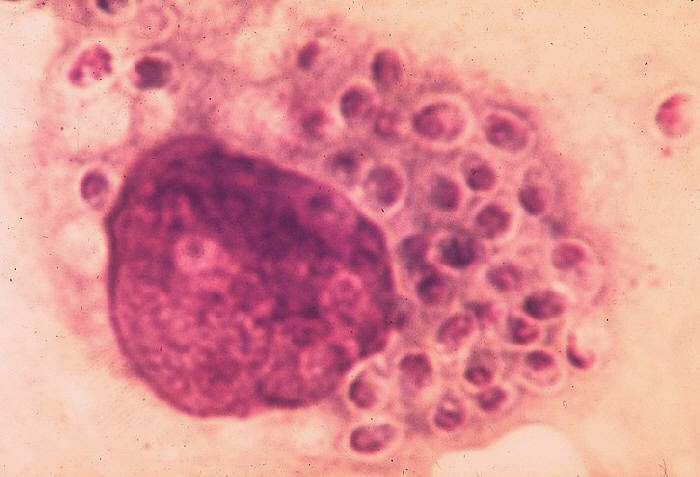
    Histiocyte (macrophage) filled with Histoplasma.It's most common in the southeastern, mid-Atlantic, and central United States; such as the Mississippi and Ohio river valleys. It can cause an acute pneumonia, which presents as cough, fever, and malaise. Chest X-ray will show hilar adnopathy and may demonstrate areas of pneumonia. Disseminated histoplasmosis are more common in HIV patients.

    Labs: Microscopy will show macrophage filled with Histoplasma. Can present as coin lesions that is calcified on chest x-ray.

    Key Scenario: Found in soil and droppings of birds bats so, cave exploration and cleaning bird coups is associated with the fungus. Also, doing activities that disrupt soil.

    Blastomycosis
    Broad-based budding with thick double refractice walls.
    It's endemic in the south-central and north-central United States. It affects the lungs, skin, bnes, joints, and protaste. Infection in immunocompromised hosts is uncommon. Primary pulmonary infection may be asymptomatic or present with flu-like symptoms. Forms granulomatous nodules.

    Labs: Microscopy will show broad-based budding; same size as RBCs. Diagnosis is made by use of potassium hydroxide (KOH) prep to reveal big broad-based budding in sputum and tissues. The organism will show thick double refractive walls around it. 

    Coccidioidomycosis
    Spherules filled with endospores.It's endemic in the southwestern United States, as well Central America and South America. Primary pulmonary infection has a non-speicif features, such as fever, fatigue, dry cough, weight loss, and pleuritic chest pain. It can spread to bones as skin; cutaneous findings, such as erythema multiforme and erythema nodosum, as well as arthlagias, are common.

    Labs: Microscopy will show spherules filled with endospores.

    Key Scenario: Patient gets infected after and earthquake, because the spherules in dust are thrown up in the air. 

    Image Source: Medscape

    Rx: Treated with fluconazole or ketoconazole for local infections. Amphotericin B for systemic infections.


    Follow me on twitter and get updates automatically.

    Pleural Effusion: Transudate vs. Exudate

    Pleural membrane is the layer of membrane the covers lung from the pleural space.
    Pleural space is the space between the lung and the chest wall; it's a space where the lung can expand to when the person inhales.
    Effusion is the escape of fluid from the normal vessels by rupture or abnormal transition.

    When there is a pathology involving the lung such as from pneumonia (lung infection) or cancer, fluid from the vessels surrounding the lung tend to exit out in the interstitial space and in the pleural space, hence effusion. Effusion can be classified in to two types: the lighter effusion is called transudate and the heavier effusion is called exudate.

    Pleural Effusion
    Transudates
    Transudate effusion is due to an imbalance between hydrostatic and oncotic pressures that increases fluid movement across the capillaries into the visceral pleura and the pleural space. Transudates fluid does not require further intervention except for treatment for the underlying cause.

    Exudates
    Exudative effusions are due to capillary membrane permeability caused by pleural and lung inflammation. A specific criteria called the Light criteria, defines exudate:
    • Pleural fluid protein/serum protein ratio >0.5
    • Pleural fluid lactate dehydrogenase (LDH)/serum LDH ratio >0.6
    • Pleural fluid LDH >2/3 of the upper limit of normal for serum LDH
    Exudate effusion will also have a criteria of pleural fluid glucose <60 mg/dL due to the high metabolic rate of leukocytes (and/or bacteria) within the fluid.  

    Updated 6/14/2014
    The lungs are not the only areas of effusion; other areas can have effusion as well such as the peritoneum (the abdominal area).
    Causes of Transudate Effusion

    - Congestive Heart failure
    - Cirrhosis (portal hypertension and hypoalbuminemia)
    - Peritoneal dialysis

    Causes of Exudate Effusion
    - Pneumonia
    - Malignancy (usually lung cancer in men and breast cancer in women); when there is a large unilateral pleural effusions then it's mostly due to malignancy

    Image source: Clevelend Clinic


    Follow me on twitter and get updates automatically.

    Biophysical Profile Explained

    Biophysical profile (BPP) is a scoring system which measures the health and well being of the fetus. The scoring system is used in high risk pregnancies such as mothers who do drugs while being pregnant, and with decreased fetal movement, or when there is nonreactive nonstress test.

    2 points are given to each perimeter which consists the BPP:

    • Nonstress test
    • Fetal tone (fetus flexes or extends an extremity)
    • Fetal movement (at least 2 or more in 30 minutes)
    • Fetal breathing (chest expansion must be 1 or more in 30 minutes or breathing of 20 seconds in 30 minutes)
    • Amniotic fluid index (measure with sonogram)
    If each perimeters exist then a score of 2 is given, if not then a score of 0 is given. A BPP of 8-10 is normal, 4-8 is inconclusive, and a score of 4 or below is abnormal. A biophysical profile score of 2 or less is fetal asphyxia (deprived of oxygen) and the fetus must be delivered immediately.

    Other minor points to consider:
    • When there is BPP score of 8 and there is decrease of amniotic fluid (oligohydramnios) , delivery should be considered since complications will likely happen.
    • If the patient is less than 37 weeks gestation the BPP should be repeated in 24 hours. If it doesn't improve in 24 hours than then delivery should be done.
    • When the BPP score is 6 without oligohydramnios, delivery should be considered if the patient is greater than 37 weeks gestation.
    • When the BPP score is 6 with oligohydramnios then delivery should be done if above 32 weeks gestation.
    • When the BPP score is 6 and the patient is less than 32 weeks gestation then daily monitoring should be done.
    • When the BPP score is 4 and the patient is greater than 26 weeks gestation, then delivery should be done.


    Follow me on twitter and get updates automatically.

    Need One Source for USMLE Step 2 CK

    I have been studying on and off for the USMLE Step 2 CK and it’s very frustrating that I have to use multiple sources. Studying for the USMLE Step 1 was not as bad because USMLE World and First Aid was all that was needed at the end. However, for the Step 2 CK there doesn’t seem to be a base agreement for a single source.

    Master the Boards for the USMLE Step 2 CK is good but it’s incomplete. A lot of the topics needs elaboration and answer the question of why. As in why should we used certain tests and not the other. ON top of that the book fails to include the conceptual content from basic sciences that we still need to know. I use First Aid for the USMLE Step 1 as a supplement with my Step 2 CK studying and it’s taking longer than it should. Also, certain tests need explanation with pictures. Some of these tests I have to look up on Google and I need to see videos and pictures of what the tests are and how it’s conducted to diagnose certain illnesses.

    A section for pharmacology should have been created because all the drug side effects and interactions should be noted.

    It would be a big thumbs up to anyone who can write one book for the USMLE Step 2 CK.  The book should have some margins to write and they should include everything.  Unlike MTB which the information for Step 2 CK is missing, and some of it is in the Step 3 book.


    Follow me on twitter and get updates automatically.

    How to Prepare Yourself to be More Competitive

    I spoke to two different doctors from Northwestern University. One is a board certified GI doctor who’s been practicing for 35 years. Another doctor is a board certified cardiologist, who is also an associate professor, and a researcher in hypertrophic cardiomyopathy. They gave me similar advice, which you should pay attention to.

    As an IMG, you should be well aware that we need to be more competitive than our AMG counterparts. We were not spoon-fed like American medical students; therefore, we have the ability to go beyond the norm in order to land a good residency.

    When we need to consider residency, we need to cover four things and we need to be on top of it. As an IMG, this is the least that we should do.

    1. USMLE Step 2 CK score should be competitive. If you did well in USMLE Step 1 then that’s great, and if you didn’t do all that great then this is the chance to make up for it. The USMLE Step 2 CK score should be competitive; try to score as high as you can. Also, make sure your Step 2 CK score is higher than Step 1 score because it’ll show the residency board that you are improving. And also make sure you pass the USMLE Step 2 CS on the first try.

    2. Clinical clerkship grades should be close to 4.0 as much as possible. Us IMGs are fortunate that we can do clinical clerkships and it’s part of the curriculum. Use your clinical clerkships to the best of your ability and do your best to get straight A’s. The grades in clinical clerkships are weighed heavily because it’s conducted in the US. Your grades in the island is not as important as your clerkship grades because those grades cannot be assessed on the same, fair level.

    3. Letters of recommendation (LOR) are important because it gives an insight of your strengths and weaknesses by the attending physicians who worked with you. It’s very important to get LORs from attending physicians who will praise your work specifically and avoid the attending physicians who will only write a generalized LOR. Also, before you start your clinical clerkships, try your best to get attending physicians who are directors or chairman of departments because it will increase the value of the LOR.

    4. Research is a vital part of your application. For those who did not transferred out of SJSM, it is part of your requirement in order to graduate. SJSM requires all students to conduct some kind of research to receive their MD degrees. According to all Northwestern University physicians, research will set you apart from the rest of the applicants. Research work at notable institutions are very good such as University of Chicago or Northwestern University. However, you can also do research with 3rd year resident doctors in the hospitals you do rotations in.

    In addition to the four things I mentioned, do extra curricular activities such as volunteering at other hospitals or getting involved in heath fairs. This will show residency boards that you are just more than books and grades.


    Follow me on twitter and get updates automatically.

    Organizing to Study for the USMLE Step 2 CK

    The USMLE Step 2 CK is not as easy as you may hear. You may have heard that the hardest part is USMLE Step 1, that could be partly correct but it’s not totally accurate. Studying for the Step 2 CK is not the challenging part, the challenges is finding the right resources. For the USMLE Step 1, USMLE World and First Aid was all you need at the end once you established the basic science foundation. But for the USMLE Step 2 CK, you cannot rely on just one source. You actually need more than USMLE World for Step 2 CK. What’s frustrating is each source has its positives and negatives and so you need multiple sources to cancel out the positives. For example, you could use the book Step Up to Step 2 for the conceptual things, but for what is the next step in management you will need Master the Boards books. For Master the Boards you need both books for Step 2 CK and for Step 3. A lot of the information is missing in the Step 2 CK version, which is on the Step 3 book.

    Honestly, it’s just an incredible challenge to balance rotations and studying everything well enough for the USMLE Step 2 CK. However, if you have the will you have the way so, study hard.

    In Addition
    You should also make sure you have your First Aid for the USMLE Step 1.  You will need it to look back for references.


    Follow me on twitter and get updates automatically.

    Time is Valuable in Internal Medicine Rotations

    There is so much frustration during rotations. Some attending doctor hardly gives us time to do our other work that we are supposed to do in Internal Medicine rotations. It’s irritating that they keep us waiting for them for hours so we can round. Unfortunately this is the way of clinical clerkships as we have to do everything the doctor tells us to do as he/she has the final say in our grades.

    I am hardly getting any time to study for my USMLE Step 2 CK. My advice, for prospective students who are going to start clinical rotations, is to start studying for Step 2 CK immediately after passing the USMLE Step 1.

    I attempted to study in the hospital but with all the hectic activity that it’s so hard to. In the day room where it’s separated from the patients there are medical students walking around because doctors use them as free labor. Then there are nurses running around and yelling and then there are resident doctors who require medical students to do new H&Ps on new admissions. So it’s just pure hectic lifestyle in this 12 weeks of internal medical rotations.


    Follow me on twitter and get updates automatically.

    Clinical Rotations Review

    So what’s been happening with clinical rotations? Well, I’ll tell you; it’s not as bad as studying for the USMLE Step 1. The schedule I get depends on the attending doctor that we are under. Every rotation has a certain schedule, which is based on when and where the attending doctor show up or where he/she sends you.

    For example, I did a Pediatric elective rotation and I showed up at three different clinics and a hospital. This rotation is off site from Jackson Park Hospital (JPH) so I never stepped into JPH until I started my core rotations.

    The rotations are not that bad; however, it was difficult for the transition, from studying in a closed room for months to working with people in a big city.  I have not interacted with different people for a long time since I was locked up studying for the USMLE Step 1 and the first month of rotations was hard while I adjusted.

    Tasks
    Basically I do check up on the patients and report any findings to the attending or the physician assistant. The workload is not that much as it’s basically conducting what the doctor is supposed to do but their work in us. The workload includes doing a physical check up and doing SOAP notes on paper or on the computer, which depends on the facility.  The attending doctor just walks in the room after I do my work and speaks to the patient and overlooks my work and corrects any error and signs off our work; this entire process takes about 30 minutes. I spend majority of the time in the exam room as I conduct the work and the doctor takes only 5 minutes to do his part.

    Study Time
    This is where things are not so pleasing. Unless you can manage your time, studying while conducting rotations is kind of hard. If I come home at 5 in the evening then I’m tired and if I don’t have anything to eat then I have to cook so that takes more time. So at the end of the day I’m only left with 2-3 hours of study before I need to go to sleep because you need to be awake and focused to work the next day.


    Follow me on twitter and get updates automatically.

    Happy New Year

    As we start the new 2013 year, I just like to say thank you to all my readers for giving me input on my writings. Your comments and emails means a lot even if you were asking questions. Your comments have motivated me to keep on writing and recording all that I see and experience in my journey to be a medical doctor.

    So what have I been doing?
    Well I just completed a pediatric elective rotation. It wasn’t too bad but it was a wake up call from my previous experience of studying 12 hours a day for the USMLE Step 1. Now what I learn in clinical clerkship, I can use that to study for the USMLE Step 2 CK. I bought Step Up to Medicine book and also I bought a subscription to USMLE World for Step 2 CK. I’m still wondering if I should buy Step Up to Step 2 or the latest edition of Master the Boards USMLE Step 2 CK. I’m going on forums and asking my senior medical students which one is the best and apparently they give me mixed answers. Unlike USMLE Step 1 where First Aid and USMLE World question bank is all you need at the end, for USMLE Step 2 it’s all over the place.

    Unfortunately, a lot of things are changing and USMLE World question bank isn't going to be enough. I think Kaplan question bank will have to be added and it makes sense, the more questions you do the better prepared you will be.

    Saint James School of Medicine Rotations

    My overall view of SJSM is very good so far in terms of clinical clerkship. Basic science in Bonaire wasn’t so good because it’s basically teachers reading off the slides. On top of that the Indian teachers in Bonaire showed favoritism, which wasn’t fair.

    Clinical clerkships are not under the authority of Saint James School of Medicine office. Of course you have to go through SJSM to get clerkship but once you start your clerkship, you are then under the authority of the doctor you are assigned to. I learned a lot under the doctor I was assigned to. Her PA also taught me a great deal in how to do a full well-visit child check up and what to look for when it came to physical diagnosis for any illness.

    What I noticed about some of the these young patients in my pediatric rotation is that their mothers bring them often for every little thing. Since they are under Medicaid, it’s easy for them to come in whenever they think something is wrong. Unfortunately these mothers take up time when a simple runny nose, that their kids have, will go away by itself and nothing will cure it since there is no cure for the common cold.

    Right now it’s a great feeling that I’m moving on with establishing my career and I thank the Almighty Lord for my success.


    Follow me on twitter and get updates automatically.